Skip Navigation
Skip To Main Content

The Acorn-A School for Young Children

Creating Curious Thinkers and Confident Learners

Tall Oaks is the next chapter in the Acorn experience.

Our first and second grade students build upon the foundations developed in preschool and kindergarten while taking on greater academic challenges and increasing responsibility for their learning.

The Tall Oaks curriculum is aligned with the Texas Essential Knowledge and Skills (TEKS) for first and second grade. However, rather than teaching math, science, and reading as separate subjects, we organize learning around meaningful themes like “Bugs and Habitats,” “How We Grow,” or “Water and Weather.”  This helps children see how different skills connect to real life and creates deeper, more memorable learning.
Learning That Goes Beyond the Standards

Students build fluency, phonics, vocabulary, comprehension, writing, spelling, grammar, speaking, listening, and research skills through meaningful experiences with literature and language using our Science of Reading methodology.

Children read a wide variety of fiction and nonfiction and learn to:

  • Read with increasing accuracy and fluency
  • Build vocabulary through reading and conversation
  • Identify important ideas and supporting details
  • Make predictions, connections, and inferences
  • Ask and answer questions about texts
  • Retell, summarize, and explain what they have learned
  • Compare information from different texts
  • Communicate ideas clearly through writing
  • Revise and improve their work
  • Conduct age-appropriate research
  • Writing becomes increasingly purposeful.


Students write stories, personal narratives, informational pieces, responses to literature, and research-based work. They learn that writing is a process of thinking, drafting, revising, and communicating.

The hands-on mathematical foundation developed in kindergarten continues into first and second grade using the Math Their Way methodology. 

Children continue to use concrete materials and visual models as they move toward more abstract mathematical thinking. Students develop increasingly sophisticated understanding of:

Number relationships and place value
Addition and subtraction
Multiplication and division concepts
Fractions
Geometry
Measurement
Data and graphs
Patterns and relationships
Mathematical problem-solving

A problem may begin with manipulatives, move to a drawing or model, and eventually be represented with numbers and symbols. We want children to understand mathematics rather than simply memorize procedures.

Students explore grade-level concepts through hands-on experiences involving:

Living things and their environments
Weather and seasonal patterns
Earth and natural resources
Matter and physical properties
Force, motion, and energy
Natural phenomena
Scientific investigation

We follow your child’s natural curiosity and questions. When our students notices a caterpillar on the playground, we don’t move on; we explore it together as an introduction to a science discovery. A science lesson might begin with a question: What does it eat? Where does it go? How does it move? These genuine questions drive deeper learning than a pre-planned lesson ever could.
 

Students explore the people, places, events, and ideas that shape their world.

Through stories, maps, research, discussion, projects, and real-world experiences like field trips to the Alamo or taking the VIA bus to The Pearl District, students learn to:

Understand communities and their characteristics
Explore important historical people and events
Use maps and geographic tools
Recognize how people interact with their environment
Understand basic economic concepts
Explore the roles and responsibilities of citizens
Recognize similarities and differences among communities and cultures
Make connections between the past and present

Social studies becomes more meaningful when children can connect what they are learning to their own lives.

A map becomes more than lines and symbols.

Students continue to develop creativity, communication, and cultural awareness through art, music, and Spanish instruction twice each week.

Art

Students explore artistic techniques, materials, artists, and creative processes while developing their own artistic ideas. Art provides another way for children to communicate, interpret, experiment, and think creatively.

Music

Music provides opportunities to develop rhythm, listening, movement, performance, expression, and collaboration. Twice-year performances showcase students' growing appreciation and awareness of great musicians and composers along with their inspirational works. 

Spanish

Spanish introduces students to another language and provides opportunities to develop vocabulary, listening skills, communication, and cultural awareness. Together, these experiences help children discover that there are many ways to understand and express an idea.

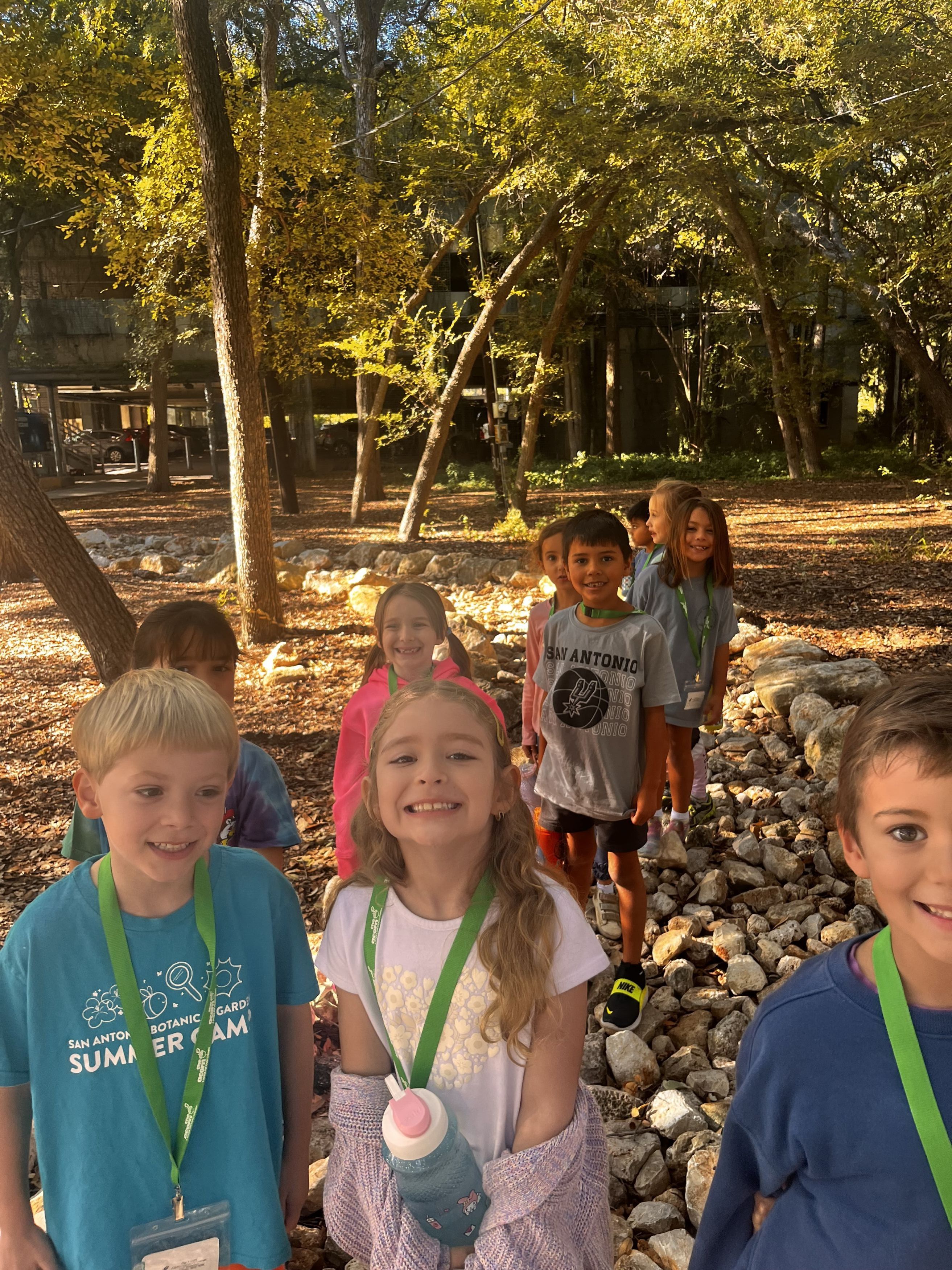
Nature remains an important part of our Grade School curriculum. The outdoor environment provides opportunities for students to apply academic concepts in meaningful ways.

A garden can become a science investigation. A nature walk can become a writing lesson. Measuring an outdoor space can become a mathematics problem. Natural materials can become the beginning of a design challenge.

Nature is not a break from the curriculum. It is one of our classrooms.


Growing Into Who They Are

Through hands-on learning, meaningful relationships, outdoor exploration, and a strong academic foundation, we prepare children not simply for the next grade, but for the many years of learning ahead. We want our students to leave Tall Oaks with a sense of wonder, a belief in their own abilities, and the confidence to ask questions, take on challenges, and find their place in the world.

Explore Grade School

Schedule A Tour

Apply